


Selling a house at auction can be a great way to achieve a quick, legally binding sale. It is becoming increasingly popular among sellers who want certainty and speed. Auctions work differently from traditional estate agent sales and understanding the process can help you decide if it is the right choice.
This guide covers everything you need to know about selling a house at auction, from benefits and costs to the step-by-step process and legal requirements.
Why Sell a House at Auction?
Selling at auction offers several advantages, particularly if you need a fast sale or have a property that might struggle on the open market.
Speed
- Once the auction ends, contracts are legally binding and completion typically happens within 28 days.
- This makes auctions ideal for sellers who want to avoid a lengthy sales process.
Certainty
- When the hammer falls, the winning bidder must pay a deposit immediately.
- This means there is no risk of buyers pulling out at the last minute, as can happen with private sales.
Competitive Bidding
- If multiple buyers are interested, they may bid against each other, pushing the price up.
- This can lead to a higher sale price than expected, particularly if the property is in demand.
Suitable for Unique or Problematic Properties
- Auctions attract investors and developers looking for renovation projects.
- Properties that may struggle on the open market due to structural issues, short leases, or unusual features can sell well at auction.
Avoiding Sales Chains
- Unlike estate agent sales, there is no risk of delays due to a broken property chain.
- Buyers must complete the purchase within the agreed timeframe.
Potential Downsides of Selling at Auction
While auctions offer benefits, there are also risks to consider.
No Guaranteed Sale
- If bidding does not reach your reserve price, the property may not sell.
- Some auctioneers offer post-auction negotiations to secure a deal.
Higher Costs
- Auctioneer fees are typically around 2.5% of the sale price.
- Additional expenses include marketing, legal fees and entry fees.
Limited Buyer Pool
- Not all buyers are comfortable with auctions.
- Many rely on mortgages, but auction sales require faster completion than most lenders allow.
Types of Property Auctions
There are two main types of auctions:
Traditional Auction
- Buyers bid in a live auction (either in-person or online).
- The winning bidder exchanges contracts immediately and pays a deposit.
- The full amount is due within 28 days.
Modern Method of Auction (Online Auctions)
- Conducted entirely online, with a longer completion period (typically 56 days).
- Buyers can secure mortgages, making auctions more accessible.
- Often used by estate agents alongside traditional sales.
Step-by-Step Guide to Selling at Auction
1. Choose an Auction House
- Look for a reputable auctioneer with experience in your area.
- Check their recent sales and success rates.
- Ensure they are members of professional bodies like the National Association of Valuers and Auctioneers (NAVA).
2. Property Valuation and Setting a Guide Price
- The auctioneer will assess your property and suggest a guide price to attract buyers.
- You will also agree on a reserve price, which is the lowest amount you are willing to accept.
- The reserve price is confidential, while the guide price is published.
3. Prepare a Legal Pack
- A solicitor will prepare a legal pack containing:
- Title deeds
- Local authority searches
- Planning permissions
- Lease details (if applicable)
- Energy Performance Certificate (EPC)
- Buyers will review this pack before bidding.
4. Property Marketing and Viewings
- The auction house will promote your property through:
- Online listings
- Email campaigns
- Print advertising
- Social media
- Viewings will be arranged so buyers can inspect the property.

5. Auction Day
- If the property receives bids above the reserve price, it is sold.
- The buyer pays a 10% deposit immediately and signs a contract.
- The remaining balance must be paid within 28 days.
6. Completion and Payment
- The buyer transfers the final amount to complete the sale.
- You receive the funds, minus the auctioneer’s fees.
How Much Does It Cost to Sell at Auction?
Selling at auction involves several costs:
1. Auctioneer Fees
- Typically 2%–3% of the sale price.
- Some auctioneers charge a fixed entry fee instead.
2. Entry and Marketing Fees
- Some auction houses charge a listing fee (£200–£500).
- Additional marketing costs may apply.
3. Solicitor Fees
- Legal costs for preparing the legal pack range from £500–£1,500.
4. VAT
- Most auction fees include VAT at 20%.
Maximising Your Property’s Auction Sale Price
To attract the highest bids, follow these tips:
1. Set a Realistic Guide Price
- A lower guide price can generate more interest and bidding competition.
2. Present the Property Well
- Clean and declutter before viewings.
- Consider minor repairs to improve appeal.
3. Provide a Complete Legal Pack
- Missing documents can put buyers off.
- Ensure your solicitor completes all paperwork in advance.
4. Choose the Right Time to Sell
- Auctions are busiest in spring and autumn, attracting more buyers.
Who Buys at Auction?
Understanding your potential buyers can help you market effectively.
- Property Investors and Developers – Looking for renovation projects or rental investments.
- Cash Buyers – Individuals or companies who can complete purchases quickly.
- Buyers Seeking Unusual Properties – Homes with unique features that do not fit standard mortgage criteria.
What Happens If Your Property Doesn’t Sell?
- If bidding does not reach the reserve price, the property remains unsold.
- You can:
- Accept the highest bid in post-auction negotiations.
- Relist it in a future auction.
- Sell through an estate agent.
Auction vs. Selling to a Cash Buying Company
While auctions can be an effective way to sell quickly, they are not the only option. If you want a fast, hassle-free sale without the uncertainty of an auction, you might consider selling to a cash-buying company.
How Cash-Buying Companies Work
- These companies buy properties directly, often completing sales within 7–14 days.
- They make an instant cash offer, removing the risk of a property failing to sell.
- No estate agents, no viewings and no need for extensive legal paperwork.
Pros of Selling to a Cash-Buying Company
✅ Guaranteed Sale: No risk of bidding falling short of the reserve price.
✅ Speed: Faster than an auction (often within two weeks).
✅ No Fees: Many cash buyers cover legal fees and do not charge commission.
✅ No Property Chains: Once an offer is accepted, completion is guaranteed.
Cons of Selling to a Cash-Buying Company
❌ Lower Price: Cash buyers typically offer below market value (usually 75%–85% of market price).
❌ Due Diligence Required: Some companies are more reputable than others. Always check reviews and ensure they are members of the National Association of Property Buyers (NAPB).
Which is Better – Auction or Cash Buyer?
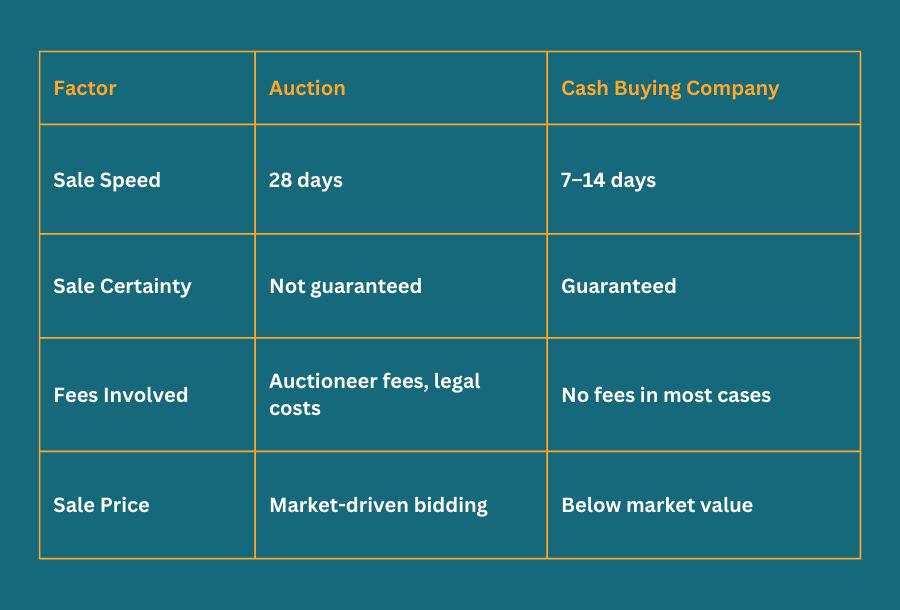
If maximising the sale price is the priority, an auction may be the better option. If you need speed and certainty, a cash-buying company might be the best choice.
Key Takeaways
- Auctions provide a fast, secure way to sell property.
- The process involves legal preparation, marketing and competitive bidding.
- Costs include auction fees, legal fees and marketing expenses.
- Setting a competitive guide price and preparing well can maximise the sale price.
- If the property does not sell, there are options to re-market it.
FAQs
Q1. Can I Set a Minimum Price for My Property? Yes. The reserve price is the lowest amount you are willing to accept. It is confidential and ensures you do not sell for less than expected.
Q2. What If My Property Doesn’t Sell at Auction? You can negotiate with interested buyers after the auction. Alternatively, you can list it in another auction or through an estate agent.
Q3. Do I Need to Pay Fees If My Property Doesn’t Sell? Some auction houses charge entry and marketing fees regardless of the outcome. Check terms before signing an agreement.
Q4. Are Auctions Only for Run-Down Properties? No. Auctions sell all types of properties, including modern homes, commercial buildings and land.
Q5. Can Buyers Use a Mortgage for Auction Purchases? Traditional auctions require fast completion, which is difficult with a mortgage. The modern method of auction allows buyers more time to arrange financing.
Related articles